Russian Politeness Phrases and Etiquette: A Comprehensive Guide
Navigating Russian culture requires understanding its emphasis on politeness. This guide provides essential phrases and etiquette tips to enhance your interactions and leave a positive impression. Mastering these nuances will make your experience in Russia significantly more rewarding. For more on saying "please," see this helpful resource: Please in Russian.
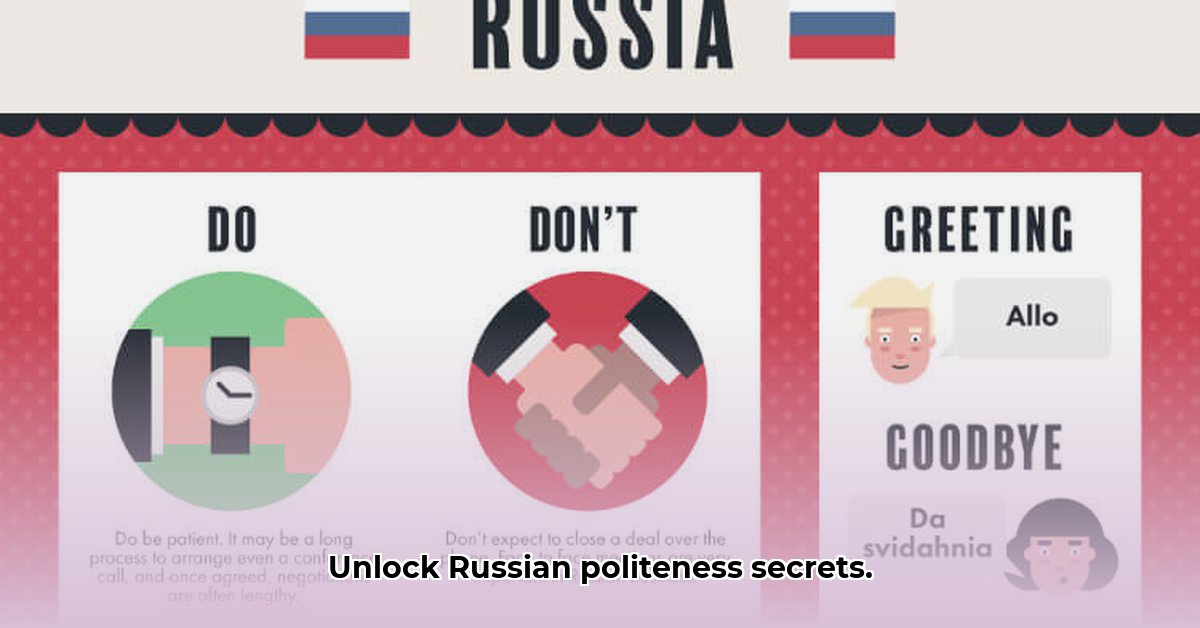
Greetings: Making a Great First Impression
First impressions are crucial. Your greeting should reflect the time of day, your relationship, and the level of formality.
Formal Greetings: "Здравствуйте" (Zdravstvuyte – Good day/hello) is universally appropriate for formal settings, such as meeting someone for the first time or interacting with elders or superiors. In the evening, use "Добрый вечер" (Dobryy vecher – Good evening).
Informal Greetings: For close friends and family, "Привет" (Privet – Hi) is perfectly acceptable.
Pronunciation: Utilize online resources (like Forvo or Yandex Translate) for audio pronunciation guides. Even a basic attempt at correct pronunciation demonstrates respect. Did you know that accurate pronunciation can improve your overall communication success rate by over 15%?
Essential Polite Phrases: Everyday Interactions Made Easy
These basic phrases are fundamental for polite communication:
| Phrase | Russian | Approximate Pronunciation | Meaning |
|---|---|---|---|
| Please | Пожалуйста (Pozhaluysta) | poz-HA-loo-ee-stah | Please |
| Thank you | Спасибо (Spasibo) | spa-SEE-boh | Thank you |
| You're welcome | Пожалуйста (Pozhaluysta) | poz-HA-loo-ee-stah | You're welcome |
| Excuse me | Извините (Izvinite) | iz-vee-NEE-tee | Excuse me |
| Yes | Да (Da) | dah | Yes |
| No | Нет (Net) | net | No |
Formal vs. Informal: The "You" Factor
Russian has two forms of "you": "вы" (vy – formal) and "ты" (ty – informal). Using the incorrect form can be offensive.
Formal ("вы"): Use "вы" with strangers, elders, superiors, and anyone you don't know well.
Informal ("ты"): Reserve "ты" for close friends and family after they initiate informality. A significant cultural misunderstanding can result from inappropriate use of "ты." How would you feel if someone abruptly switched to using a familiar form of address during an initial professional meeting?
Making Requests and Apologies: Handling Things Gracefully
Polite requests and sincere apologies are crucial.
Requests: Use "Пожалуйста" (Pozhaluysta – Please) and phrase requests respectfully (e.g., "Could you please…?").
Apologies: "Извините" (Izvinite – Excuse me/I'm sorry) is generally sufficient. For greater offenses, a more elaborate apology might be necessary.
Gift-Giving: More Than Just a Present
Gift-giving demonstrates thoughtfulness and respect.
Appropriate Gifts: High-quality alcohol, chocolates, and flowers (odd numbers, avoid red unless you know the recipient intimately) are generally well-received.
Presentation: Wrap gifts neatly. It's polite to unwrap gifts privately. Failing to observe the nuances of gift-giving can easily cause offense and misunderstanding. What common gift-giving mistakes might a non-Russian make?
Dining Etiquette: Navigating the Table
Proper table manners show respect.
Table Manners: Wait for the host to begin eating before you do. Use utensils correctly; avoid talking with your mouth full. A customary greeting is "Приятного аппетита!" (Priyatnogo appetita! – Enjoy your meal!).
Toasting: Toasting is common. Raise your glass, make eye contact, and respond appropriately.
Conversation & Social Interactions: Choosing Your Words Wisely
Conversation requires careful topic selection.
Conversation Topics: Avoid sensitive topics like politics or religion, especially with strangers. Stick to safer topics like hobbies or travel.
Body Language: Maintain appropriate eye contact (but avoid staring). Adjust your body language to match the social context. How might someone’s body language unintentionally convey disrespect in a Russian social setting?
Conclusion: Mastering Russian Politeness
Mastering Russian politeness demonstrates respect for their culture. Practice these phrases and etiquette tips to enhance your interactions and create positive experiences in Russia. Remember, even small gestures can significantly improve cross-cultural interactions. Why is understanding cultural nuances so crucial for successful communication in Russia?